Micro Gear Motors in Robot Grippers: When to Use an Integrated Motor-Gearbox-Encoder Module
Nov. 11, 2026
Last month a US robotics team sent us an inquiry that captures the whole problem in one line: 24 V supply, 0.19 N·m output torque, a Hall sensor for position feedback, and a weight budget of about 60 grams — “lighter is better.”
That's a finger actuator. And it's the kind of request we now see weekly, because dexterous hands and adaptive grippers have gone from lab demos to production programs. The hard part isn't finding a motor. It's deciding how much integration you actually need around it — gearbox, encoder, control electronics — when your entire actuator has to fit inside something the size of a finger.
Here's the short answer, then the reasoning.
If your gripper needs force control or precise finger positioning, an integrated motor-gearbox-encoder module usually wins. If you're driving a simple open-close jaw with a limit switch, a separate micro gear motor and a sensor elsewhere in the mechanism is cheaper and easier to service. Everything below is about how to tell which side of that line you're on.
The most common selection mistake we see is picking a motor first and discovering later that the gearbox doesn't fit, or that the stall torque looks great on paper but sags after fifty grip cycles.
Work backwards instead:
A real example from our inquiry log: a Belgian engineer specifying a planetary DC gear motor for measurement equipment asked for 16 mm diameter, 12 VDC, roughly 50:1 reduction, 0.35 N·m continuous torque, under 40 mm total length, all-metal construction. Notice that “continuous” and the length cap came before brand or price. That's the right order.
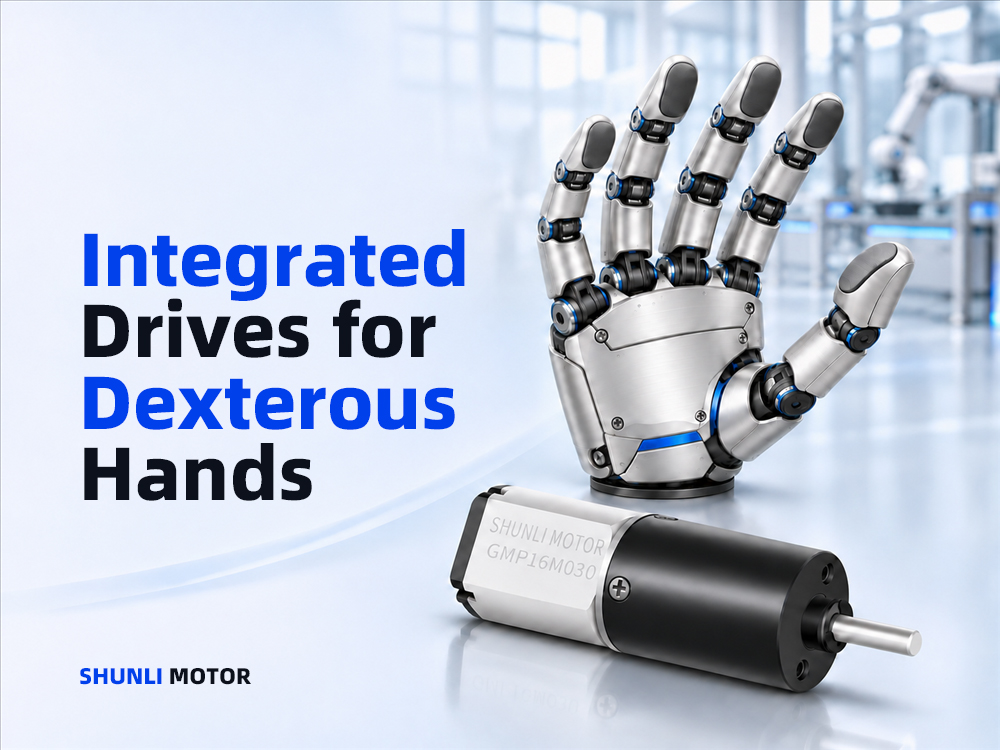
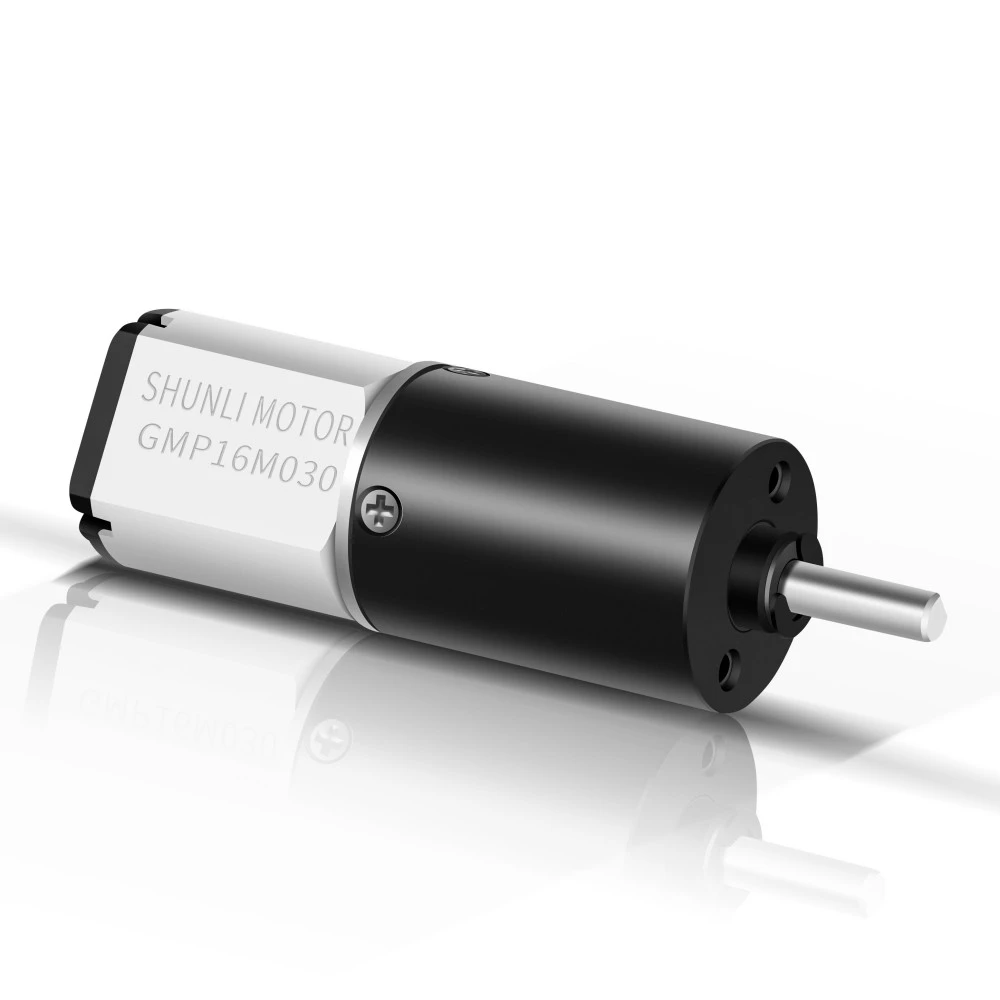
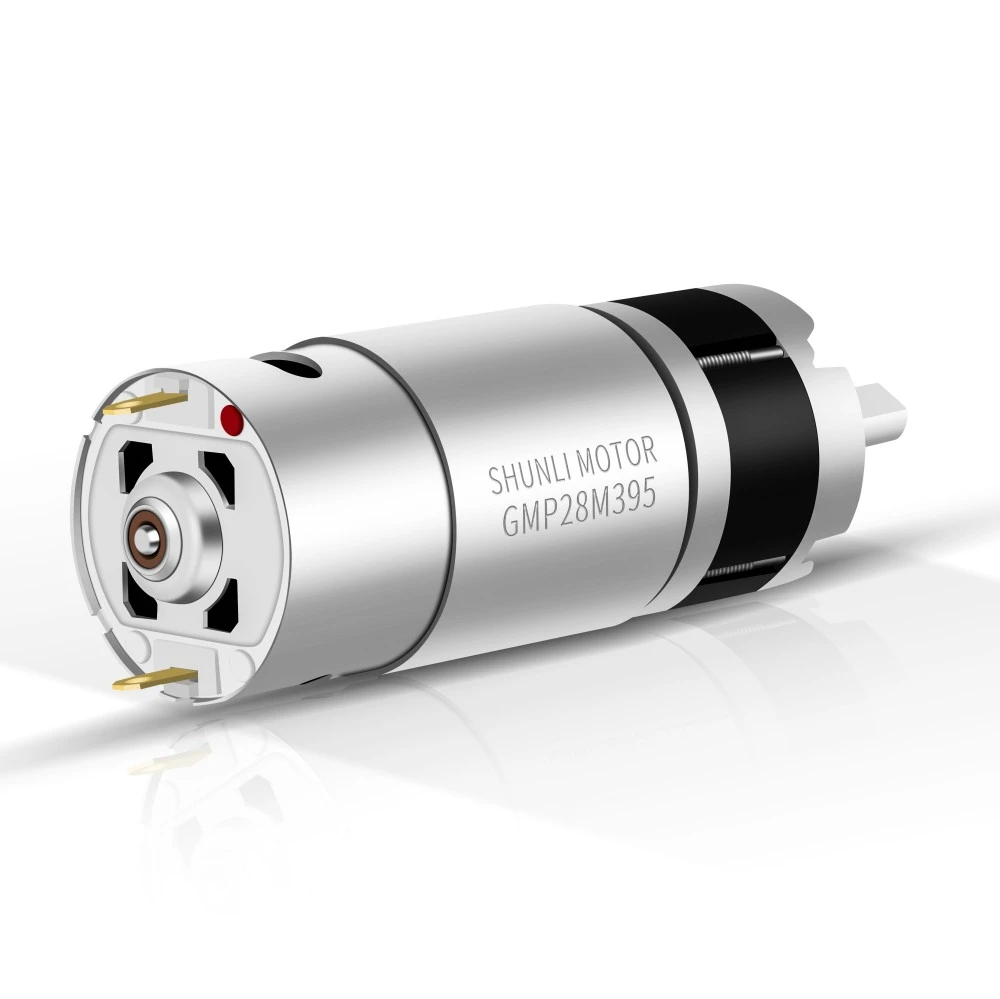
To make that concrete: our GMP16-series 16 mm planetary gearmotors, per the datasheet, deliver 0.121 N·m rated torque at 3.7 V with stall torque around 0.484 N·m (model GMP16M050-256K). Step up to a 28 mm BLDC planetary unit like the GMP28MBL2838 and rated torque rises to 1.0 N·m at 24 V. The jump from 16 mm to 28 mm buys you roughly 8× the continuous torque — which is why the space budget, decided early, effectively decides everything else.
Planetary gearing is the default for finger drives for good reasons: coaxial input and output, high torque density in a short can, and tolerable backlash when the stages are machined and preloaded properly. Two stages are usually the practical limit in a 16–22 mm envelope before efficiency losses and gear-train compliance start eating your gains.
Spur (parallel-axis) trains cost less and are easier to repair, but they consume axial length. In a fingertip, length is usually scarcer than diameter.
Worm gearing gives you a right-angle output and, in many ratios, mechanical non-back-drivability — genuinely useful for a gripper that must hold an object with power off. But worm stages run hot and waste torque: efficiency commonly drops to 40–70% depending on ratio and lubrication. In a sealed finger shell with almost no airflow, that heat has nowhere to go. We generally steer customers away from worm drives inside fingers unless the holding requirement is absolute.
One honest caveat: backlash numbers for micro gearboxes vary with ratio, quality class, and wear-in, so treat any single-figure claim — ours or anyone else's — as a starting point for your own measurement, not a guarantee. More on measuring it below.
This is the decision the title asks about. Both approaches exist for good reasons.
A separate motor and gearbox (or a motor-gearbox pair with the encoder mounted elsewhere in the joint) gives you:
An integrated module — motor, planetary gearbox, and encoder engineered as one unit — costs more per axis but:
A rule of thumb from programs we've supported: below roughly 6 axes, separate components with careful fixture design are usually cheaper overall. Above that, integration starts paying for itself — not in component cost, but in assembly hours and field failure rate. There's a reason the trend in 2026, from Schaeffler's new actuator factory in Taicang to the integrated dexterous-hand modules coming out of Chinese suppliers, is all pointing toward tighter integration at the module level. (Sources listed at the end.)
One boundary we state plainly to every robotics customer: finger drives and wrist/auxiliary joints are the right scope for micro gear motors. Hip, knee, and other primary load-bearing joints in humanoid or quadruped platforms need high-power servo actuators — no finger-sized gearbox changes that.
Backlash in a micro planetary stage comes from three places: the cut of the gears themselves, the clearances in bearings and shafts, and elastic wind-up in the train under load.
You can't eliminate it; you manage it. Practical guidance:
Measuring it yourself is straightforward: fix the output, apply a small known torque in both directions, and read the angular difference at the output with a dial or encoder. Do it warm and do it after 1,000 cycles if your application cycles continuously — micro gearboxes sometimes loosen measurably in the first hours of running.
Gripper motors rarely fail from a lack of peak torque. They fail from thermal neglect.
Micro motors dissipate through their flange and housing surface, which is tiny. A finger actuator inside a plastic hand shell has worse cooling again. The sequence we see in failed programs is consistent: engineer sizes to stall torque, the gripper works beautifully in the demo, then batch production shows sluggish response or windings that drift as the hand warms up.
Three habits prevent this:
Whether you buy from us or elsewhere, this list will get you comparable answers:
Point 8 is where you find out how mature your supplier actually is.
A: An integrated motor-gearbox-encoder module is usually the better choice when a robot gripper needs force control, precise finger positioning, or multiple actuators in a limited space. It reduces alignment errors, shortens the wiring harness, and moves integration risks to the supplier. For a simple open-close gripper with a limit switch, a separate micro gear motor and externally mounted sensor may be more affordable and easier to maintain.
A: The required torque depends on the gripping force, linkage geometry, speed, stroke, and transmission friction. For light-pick applications such as electronics, food, and packaging, fingertip torque after gearing is typically around 0.05–0.2 N·m. Tool-using or industrial dexterous hands may require 0.5 N·m or more. The correct method is to calculate torque from pinch force and mechanism geometry, then add approximately 20–30% margin for linkage or cable friction.
A: A motor-side encoder or Hall sensor is less expensive and can help protect the motor from stall conditions, but it cannot measure gearbox backlash or compliance in belts and linkages. An output-side encoder measures the actual movement of the finger or joint and is better for high-precision positioning. High-precision dexterous hands may use both motor-side and output-side feedback.
A: For position-based tasks, plan for backlash to consume your positioning budget directly: a 1° output backlash is a 1° error floor regardless of encoder resolution. Force-controlled grasping is largely immune.
A: Yes — this is normal for hand programs. Typical flow: you provide the envelope, load profile, voltage and duty cycle; the supplier proposes a ratio and motor; samples follow in a few weeks. (For our own process, see the customisation page linked below.)
Product Categories
Enable Customized Solutions to Be Implemented Faster
Whether you're in the product concept, prototype development, or mass production phase, Shunli Motors can help you find the right micro geared motor drive solution based on your specific application needs.
Submit your product requirements now and get selection advice from our engineers.
Related Products
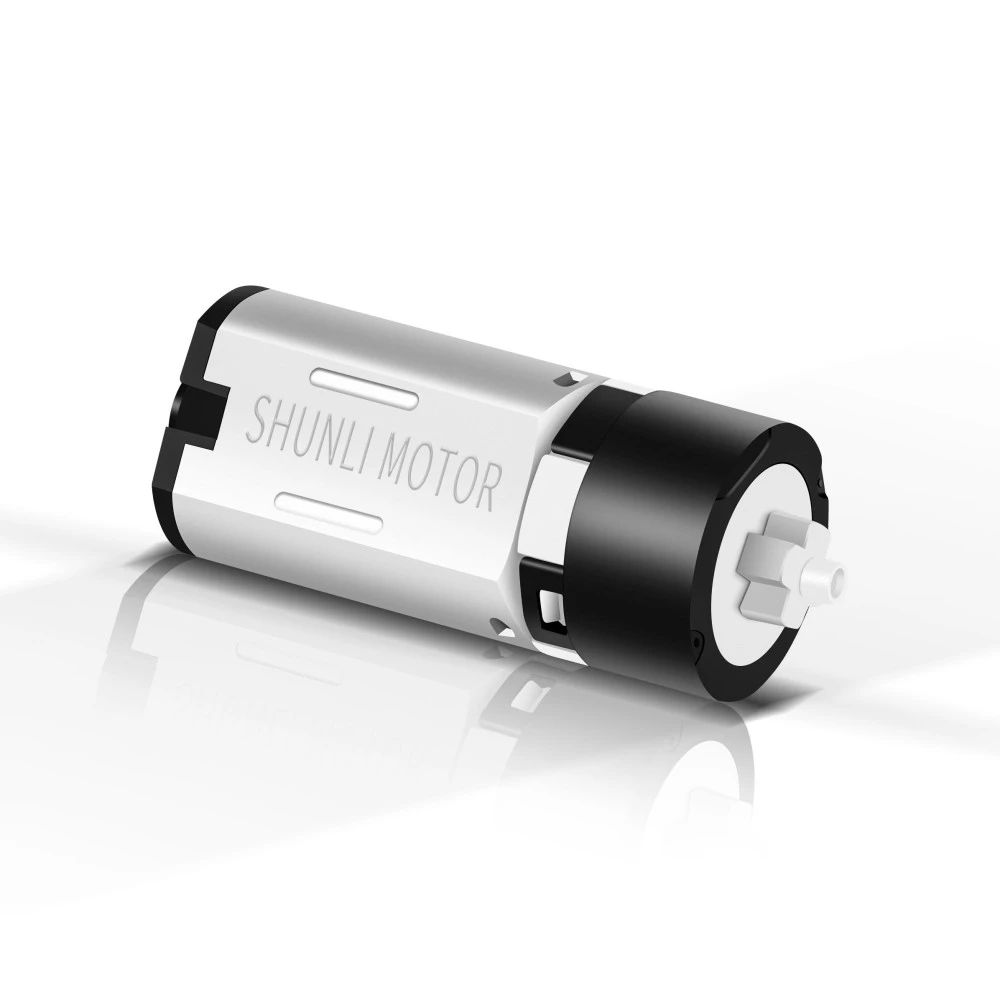
The GMP16 Planetary Gear Motor is a compact 16 mm-class drive designed for space-limited applications requiring stable low-speed output and higher torque density.
The GMP28 Planetary Gear Motor is a compact 28 mm-class 12 VDC planetary gear motor designed for applications requiring high torque density, stable low-speed output, and a coaxial drive layout.
The GMP10 is a planetary gear motor with high torque density, compact coaxial output, and strong load capacity. It is designed for robots, AGVs, lawn mowers, medical equipment, industrial automation, conveyors, and preci
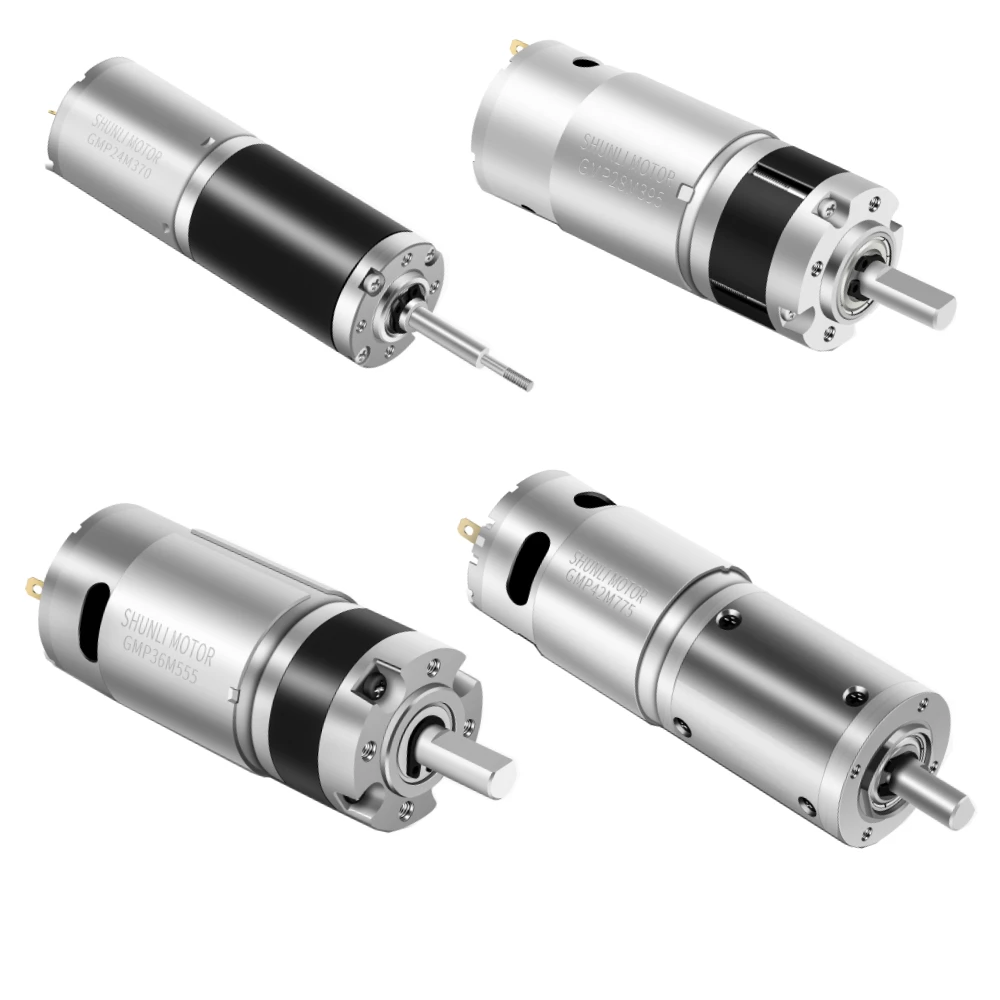
The Planetary Gear Motor uses a compact coaxial planetary gearbox to deliver higher torque density and stable transmission within limited installation space. Multiple planet gears share the load, making the structure suitable for applications that require compact size, reliable load handling, and frequent start-stop or reversing motion. It is widely used in robotics, medical equipment, industrial automation, automotive actuators, precision mechanisms, and other compact motion systems. Final selection should consider output speed, continuous and peak torque, duty cycle, backlash, current, and installation requirements.
Navigation
Navigation
Product Categories
Product Categories
Contact Us
Get in Touch
Get in Touch
Request a Quote


 Youtube
 Tiktok
 Linkedin
 Instagram
 Facebook
 WhatsApp
 WeChat