How to Choose a Reliable Brushless Gear Motor Manufacturer
How to Choose a Reliable Brushless Gear Motor Manufacturer
Nov. 27, 2026
Choosing a brushless gear motor manufacturer is not just a price comparison. The right supplier must understand your application, recommend a motor and gearbox combination that meets your performance requirements, provide consistent quality, and support you after delivery. Use this practical guide to compare suppliers and reduce technical, quality, and supply risks.

Searchers comparing manufacturers typically need clear selection steps, understandable specifications, evidence of product quality, and answers about customization, lead time, and long-term support. The process below addresses these purchasing concerns in order.
Start with the equipment the motor will drive and the conditions in which it must operate. A supplier cannot make a dependable recommendation from a requested voltage or motor size alone. Record the following details before requesting a quotation:
Distinguish between continuous operating requirements and short peak requirements. A motor that can produce a required torque briefly may not be able to do so continuously without overheating.
Use the application requirements to define the motor and gearbox performance at the output shaft. Gear ratio affects output speed and torque, while gearbox efficiency, load profile, and operating duration affect the motor size required. Ask an application engineer to review the calculations rather than selecting a motor solely by its advertised maximum torque.
Request a written explanation of the assumptions behind the supplier's sizing recommendation. This makes it easier to compare proposals on the same basis.
Compare the complete motor and gearbox assembly. A high efficiency, compact size, or high torque claim does not establish that a model will fit your machine or last under your duty cycle. Ask every candidate manufacturer for the same information so the quotations are comparable.
Check whether values apply to the motor alone or to the complete gear motor. Request a datasheet and a dimensioned drawing for the exact model and configuration being quoted.
A reliable brushless gear motor manufacturer should be able to explain how its products are designed, produced, inspected, and supported. Ask for specific evidence rather than relying only on a website description or a general quality statement.
Look for direct, technically consistent answers. If the supplier cannot explain a specification, identify the responsible production site, or provide the requested documentation, treat that uncertainty as a purchasing risk.
Many applications need more than a standard catalog model. Before approving a supplier, confirm which changes are practical, how they affect performance, and whether the proposed configuration will be documented and controlled.
Agree in writing which characteristics must remain unchanged after approval. This helps prevent an unapproved component or production change from affecting fit or performance.
Do not approve a motor based only on a catalogue, sales sample, or unloaded demonstration. Test a representative production configuration with the actual controller, mounting arrangement, and load wherever possible.
Keep the approved sample or a controlled reference record. If the production version changes, ask the manufacturer to identify the change and provide evidence that the revised unit still meets the requirements.
Compare the total cost and supply risk, not only the unit price. A low quotation may exclude engineering, tooling, testing, packaging, or costs associated with long lead times and inconsistent production.
Use a comparison table with identical questions for every candidate. Record evidence and open issues, then resolve significant technical or commercial uncertainties before placing a production order.
A consistent checklist helps purchasing, engineering, and quality teams evaluate suppliers using the same requirements. Include the application conditions, motor and gearbox ratings, dimensions, required documents, test results, and commercial terms. Mark each item as confirmed, not confirmed, or not applicable, and assign an owner to follow up on unanswered questions.
The equipment depends on the application and the available test facility. Use instruments with suitable ranges and calibration status, and follow safe electrical test procedures.
Do not perform a load test with improvised fixtures or exposed rotating parts. Follow the equipment manufacturer's safety instructions and use qualified personnel for electrical and mechanical testing.
Purchasing should confirm price, delivery, and contract terms. Engineering should verify application fit and performance. Quality should review inspection records, traceability, and change control. A joint review reduces the chance that one team approves a supplier based on information that does not address another team's requirements.
Request documentation that matches the quoted motor, gearbox, controller, and any custom features. Generic certificates or a datasheet for a similar model may not prove that the selected configuration meets your requirements.
Define the measurable criteria that a delivered batch must meet, such as dimensions, speed, current, noise, or other application-critical characteristics. Agree how nonconforming products will be identified, investigated, replaced, or corrected. Clear criteria reduce disputes and make incoming inspection more effective.
A low price does not account for service life, support, delivery risk, or the cost of a failure in your equipment. Likewise, a motor's maximum torque may be a short-duration value rather than a continuous rating. Compare complete assemblies using the same operating conditions and include the lifecycle cost in the decision.
Buyers sometimes confirm motor torque but fail to check gearbox output limits, radial or axial shaft loads, temperature rise, or the mounting arrangement. These omissions can cause premature wear, overheating, noise, or installation delays. Verify the complete assembly against the actual mechanical design and duty cycle.
General claims such as high quality or strict inspection are not a substitute for relevant records and a clear process. Ask how the supplier handles traceability and production changes. Require notification and approval before changes to components, materials, manufacturing location, or test methods that could affect the agreed product.
An unloaded sample may not reveal problems that occur under continuous load, frequent starts, reversing, or elevated temperature. Test the sample under representative conditions, document the results, and approve the final configuration in writing before mass production.
Use a simple scorecard to turn the review into a clear purchasing decision. Set weightings that reflect your project's priorities and retain the evidence behind each score.
Before issuing a purchase order, confirm the exact model and revision, approved drawing, order quantity, delivery schedule, inspection requirements, packaging, warranty, and change-notification terms. Keep these records with the approved sample and test results.
The most reliable choice is the supplier that can demonstrate a suitable design, explain its ratings, provide relevant quality evidence, support a representative test, and commit to consistent production and communication. A careful selection process helps prevent mismatched specifications, unexpected redesign costs, and avoidable downtime.
Shunli Motor can be included in your supplier evaluation when comparing brushless gear motor options, technical requirements, and customization needs. Use the checklist in this guide to discuss your application with any brushless gear motor manufacturer and confirm that the final product meets your documented requirements.
Product Categories
Enable Customized Solutions to Be Implemented Faster
Whether you're in the product concept, prototype development, or mass production phase, Shunli Motors can help you find the right micro geared motor drive solution based on your specific application needs.
Submit your product requirements now and get selection advice from our engineers.
Related Products
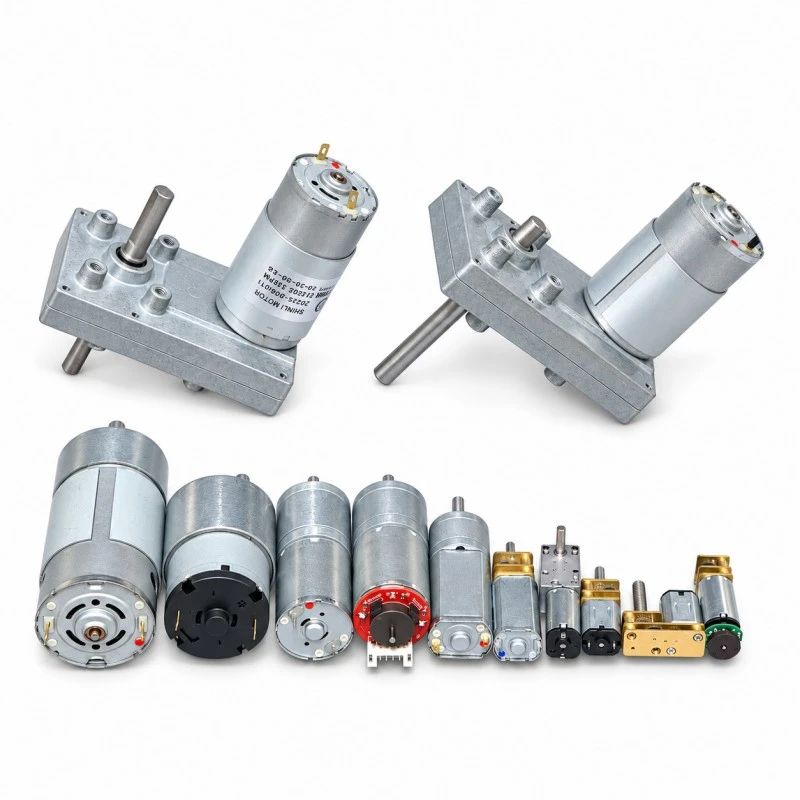
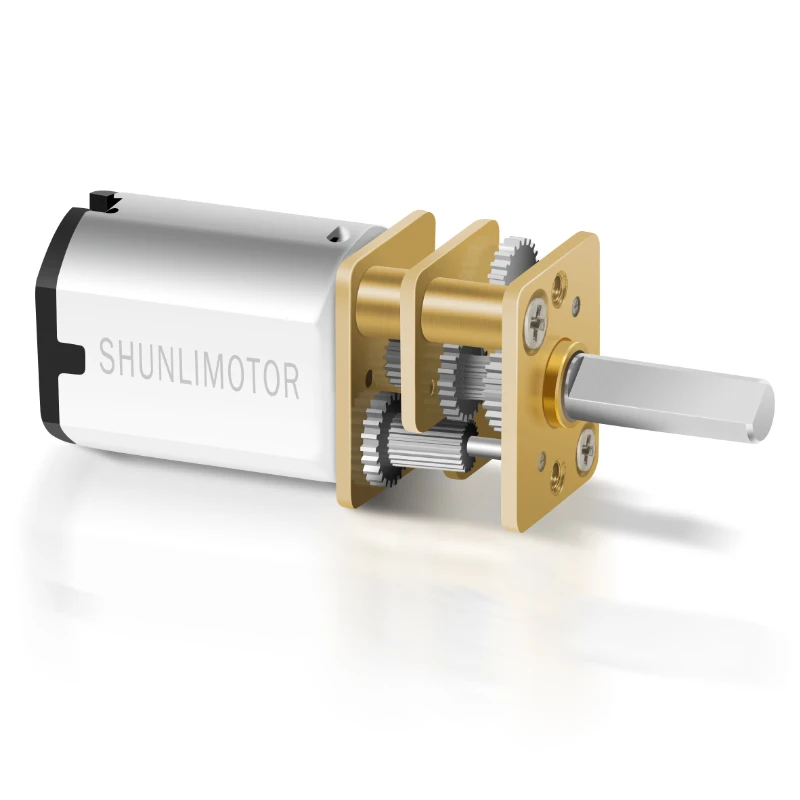
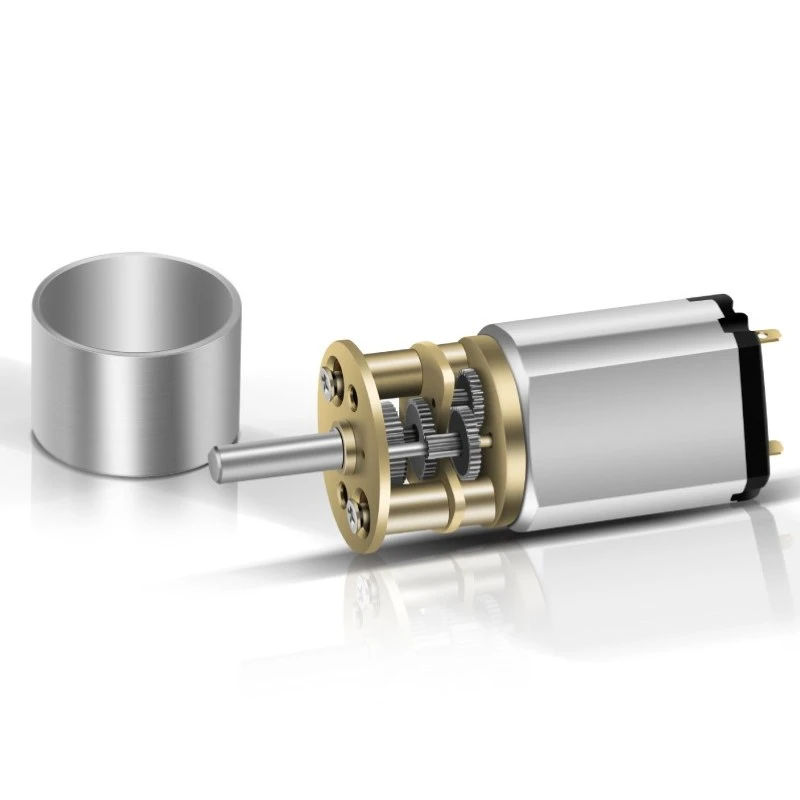
The Spur Gear Motor combines a DC motor with a multi-stage spur gearbox to provide a mature, efficient, and cost-effective drive solution for compact transmission mechanisms. Its simple gear structure supports flexible ratio, shaft, and mounting customization, making it suitable for smart home devices, commercial equipment, automotive actuators, smart landscaping systems, and industrial automation. It is a practical choice for projects that need a balance of output speed, torque, reliability, manufacturability, and cost.
The GM12 Series is a compact 12 mm-class DC spur gear motor platform developed for miniature mechanisms that require efficient speed reduction, controlled output, and cost-effective integration in limited space.
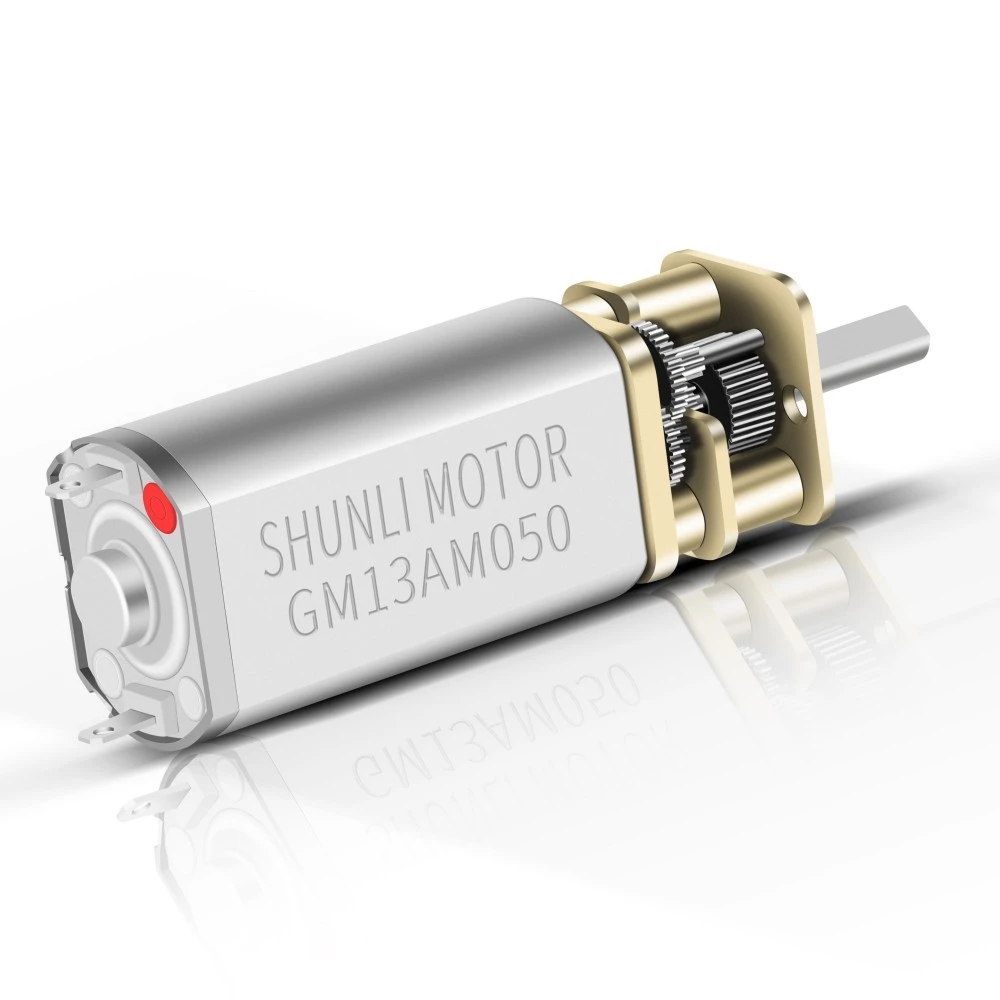
The GM13AM Series is a compact 13 mm-class DC spur gear motor designed for miniature mechanisms that require efficient speed reduction, stable low-speed output, and cost-effective transmission in a limited installation space.
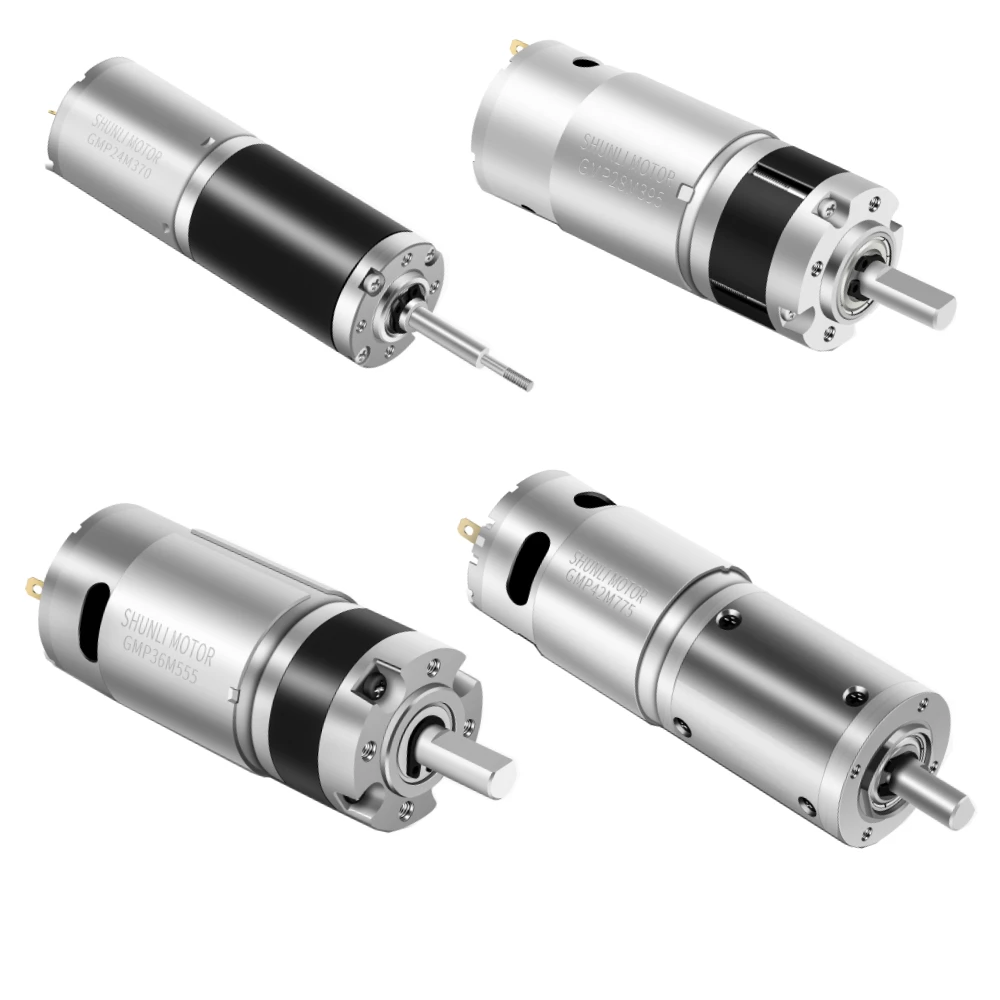
The Planetary Gear Motor uses a compact coaxial planetary gearbox to deliver higher torque density and stable transmission within limited installation space. Multiple planet gears share the load, making the structure suitable for applications that require compact size, reliable load handling, and frequent start-stop or reversing motion. It is widely used in robotics, medical equipment, industrial automation, automotive actuators, precision mechanisms, and other compact motion systems. Final selection should consider output speed, continuous and peak torque, duty cycle, backlash, current, and installation requirements.
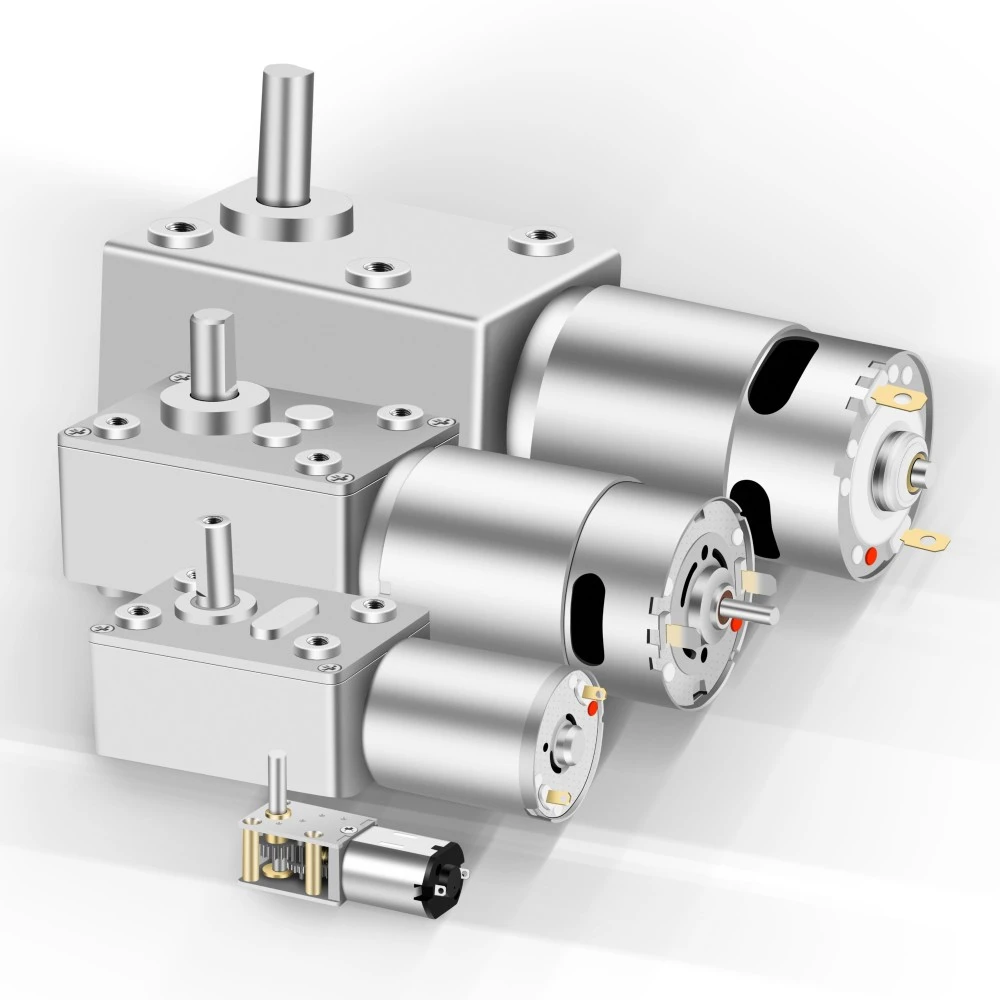
The DC Worm Gear Motor combines a DC motor with a worm gearbox to provide right-angle transmission, high reduction ratios, low-speed output, and strong load-driving capability in a compact structure. Its 90° output arrangement is well suited to valves, lifting and adjustment mechanisms, doors and windows, vending equipment, and other actuators where space layout or load-holding performance is important. Depending on the gear geometry and operating conditions, some worm gear designs may provide holding or self-locking characteristics, which should be verified for the actual application.
The GM16 Series is a compact 16 mm-class DC spur gear motor platform designed for miniature transmission systems that require efficient speed reduction, controlled low-speed output, cost-effective construction, and repeatable mass production.
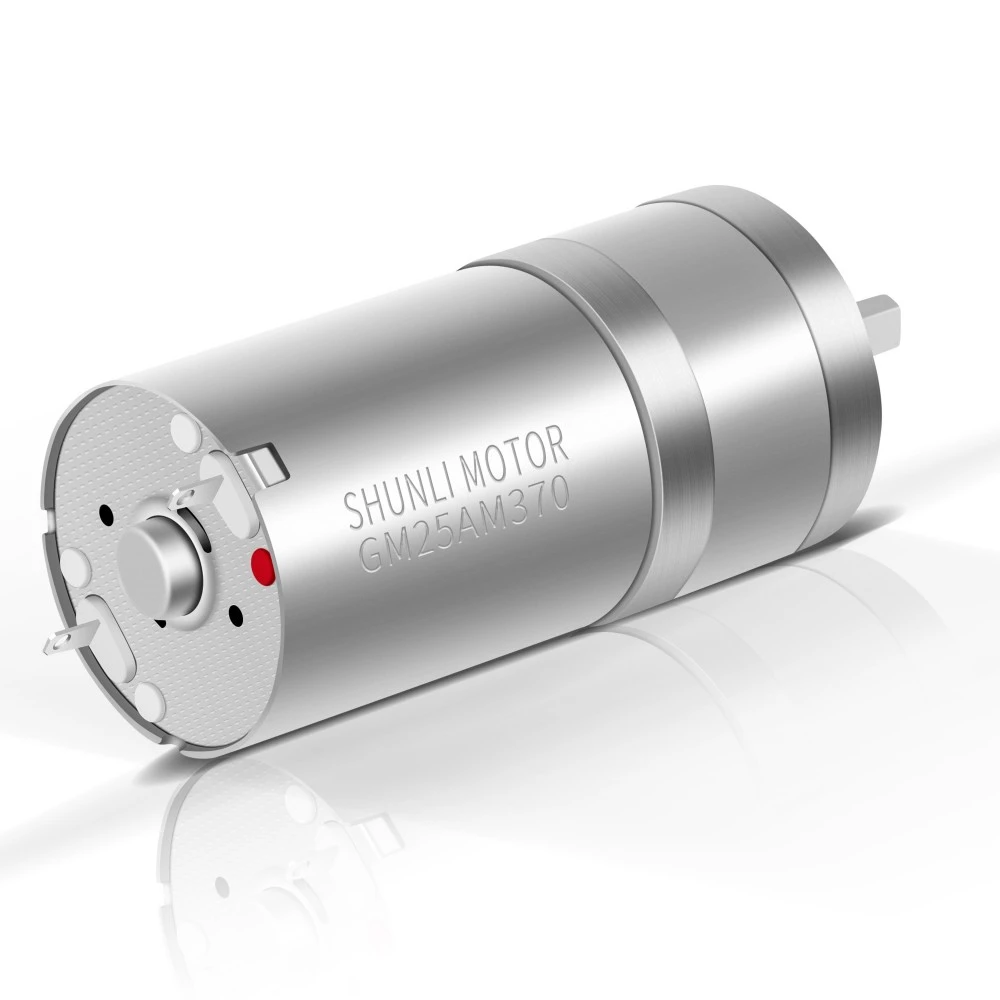
The GM25AM310/370 is a 25 mm-class DC spur gear motor platform combining a compact multi-stage gearbox with PMDC 310 or 370 motors. The supplied technical data covers gearbox options from 3 to 8 stages, multiple reduction ratios, and two reference gearmotor configurations: GM25AM310-217K at 3 VDC and GM25AM370-99K at 12 VDC.
The GM24 Series is a compact 24 mm-class DC spur gear motor platform developed for small transmission mechanisms that require efficient speed reduction, stable output, and cost-effective mass production.
Navigation
Navigation
Product Categories
Product Categories
Contact Us
Get in Touch
Get in Touch
Request a Quote
Get a Quote

Your privacy is fully protected. All details you share are treated as strictly confidential, used only to prepare your quote, and never sold or disclosed to any third party. Stored securely in accordance with GDPR.


 Youtube
 Tiktok
 Linkedin
 Instagram
 Facebook
 WhatsApp
 WeChat