How to Choose a Planetary Gear Motor Manufacturer for OEM Projects
How to Choose a Planetary Gear Motor Manufacturer for OEM Projects
Nov. 20, 2026
Choosing a planetary gear motor manufacturer for an OEM project takes more than comparing catalog prices. Purchasing, engineering, and quality teams need to confirm that a motor meets application requirements, can be produced consistently, and will be supported throughout the product lifecycle. This guide provides a practical sequence for evaluating suppliers, checking samples, and reducing sourcing risk. Shunli Motor can be included in your supplier evaluation alongside other qualified manufacturers.
Start with a written application brief. A supplier cannot recommend a suitable motor if the team provides only a voltage or a desired price. Share how the motor will be installed, what it will drive, and how it will operate over a typical duty cycle.
Separate mandatory requirements from preferences. For example, a defined shaft size may be mandatory, while a particular connector may be a preference if an alternative can be validated. This helps suppliers propose options without weakening essential performance or safety requirements.
Turn the brief into acceptance criteria that engineering, purchasing, and quality all approve. Specify measurable limits where possible, such as allowable speed variation, maximum noise, temperature rise, backlash, or permitted dimensional tolerance. Record any assumptions that still need testing so they do not become hidden differences between quotations.
Use the machine's actual operating profile rather than selecting a motor from peak torque alone. Identify continuous torque, starting torque, peak torque, required output speed, and the duration and frequency of each peak. Include the effects of acceleration, friction, external forces, and the mechanical efficiency of the driven system.
A planetary gearbox can provide high torque density in a compact package, but that does not make every planetary gear motor interchangeable. Gear ratio, stage count, materials, lubrication, bearing arrangement, backlash, and duty cycle can affect performance and life. Ask the manufacturer to state the assumptions behind its sizing recommendation.
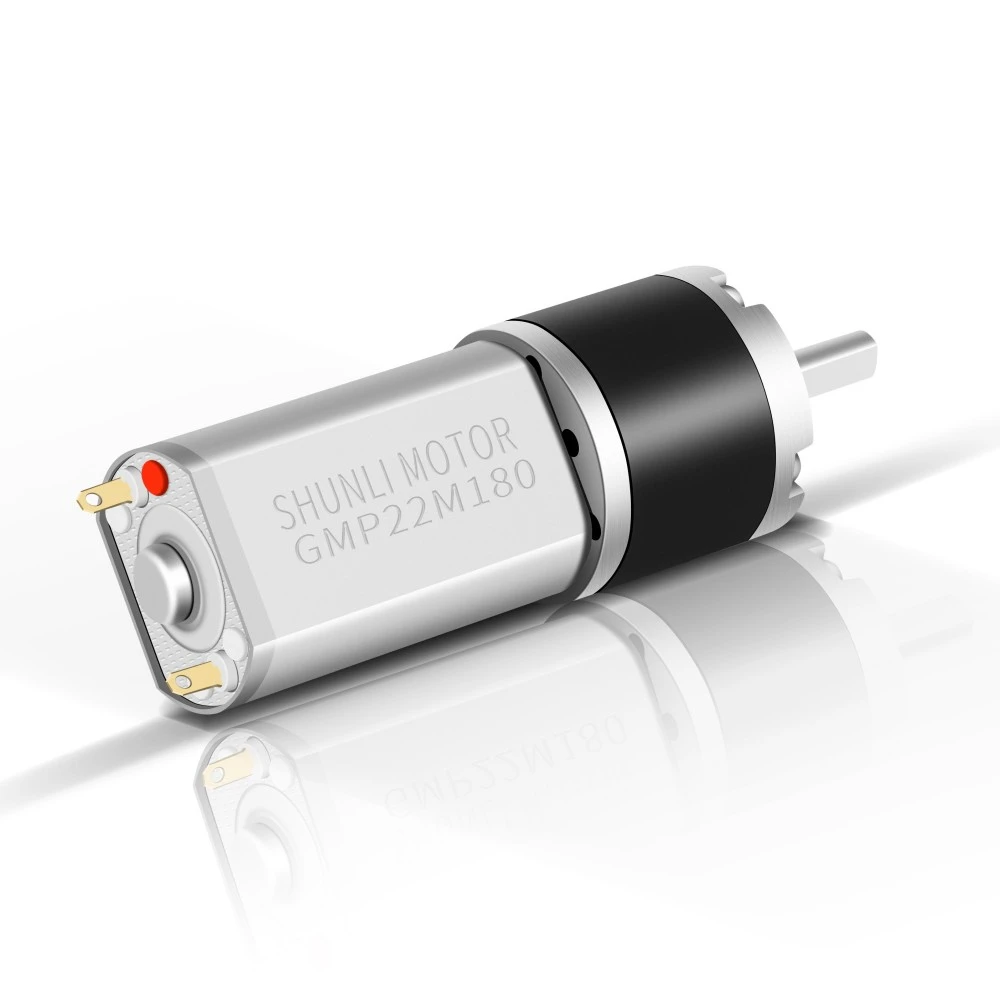
Review the complete assembly, not just the motor body. Confirm the output shaft and key or spline, mounting face, pilot diameter, connector, cable exit, and available envelope. For the electrical side, verify voltage range, current draw, startup current, motor type, feedback requirements, and compatibility with the controller. Check whether the proposed enclosure and materials suit the operating environment.
Look for evidence that a supplier has produced comparable gear motors for applications with similar load, duty, environment, and volume. A catalog range is useful, but it does not prove that a supplier can manage a customized OEM project. Ask for relevant product examples, engineering capabilities, typical project stages, and references where available.
Send each candidate the same specification and quotation template. Require suppliers to identify deviations, optional features, excluded costs, and assumptions. A lower quote may reflect a different duty rating, material, test scope, or delivery term. Do not compare prices until the technical scope is aligned.
Request a written quotation that identifies the model or configuration, rated performance, tolerances, included tests, sample cost, tooling cost, minimum order quantity, production lead time, payment terms, warranty terms, packaging, and delivery terms. Ask how price and lead time change at expected volume levels.
OEM requirements often include a nonstandard shaft, mounting arrangement, cable, connector, gear ratio, encoder, brake, or control interface. Give the supplier a controlled drawing and revision number. Ask which features can be modified, which changes require new tooling, and how proposed changes will be reviewed and approved.
Before approving a custom design, confirm ownership and control of drawings, tooling, and product data. Agree on who may authorize substitutions, how engineering changes will be communicated, and whether the supplier will notify you before changing materials, processes, components, or production locations.
A capable supplier should raise risks as well as quote a solution. Ask the engineering team to review torque and speed margins, thermal limits, backlash, noise, shaft loading, mounting stiffness, lubrication, and expected life. Request a written response to open technical questions and record unresolved items in the project action list.
Ask how incoming materials, gear components, motors, assembly, and final products are controlled. Request relevant quality certificates and supporting records, but assess the actual controls that apply to your product rather than relying on a certificate alone.
Ask the manufacturer to distinguish sample lead time from normal production lead time and peak-season lead time. Confirm available capacity at your forecast volume, order cutoffs, raw material planning, and the process for handling schedule changes. Discuss what happens if a critical component is delayed or discontinued.
For a long-running OEM product, agree on forecast updates, safety stock expectations, last-time-buy communication, and escalation contacts. These discussions help purchasing assess whether a supplier can support production after the first order, not just deliver initial samples.
Do not treat a sample as approved because it rotates or fits into the assembly. Define test conditions, measurement methods, pass or fail limits, sample quantity, and responsibility for recording results. Include the intended controller, mounting, load, and operating environment wherever practical.
When samples pass, freeze the configuration with a controlled specification, drawing revision, bill of materials where applicable, and agreed acceptance criteria. Ask the supplier to confirm that mass-production units will use the approved design and test process. Retain a reference sample or test record if your quality system requires it.
Unit price is only one part of the purchase decision. Compare the total cost of getting a conforming motor into production and supporting it over the product life.
Score shortlisted manufacturers against the same factors. Agree on weightings before reviewing final scores so the team does not change priorities to favor a preferred quote.
Record the reasons for the decision, remaining risks, required corrective actions, and approval owners. If a risk cannot be closed before production, assign a mitigation plan and a review date.
Preparing the right information reduces quotation delays and prevents suppliers from pricing different assumptions. The purchasing group should assemble the following tools and documents before requesting proposals:
If the engineering team does not yet have reliable load data, identify the measurement needed and who will collect it. A torque measurement, current log, or duty-cycle record can be more useful than an early guess based on a similar machine.
These mistakes can lead to unsuitable sizing, delayed launches, and inconsistent production. Include them in the project review before placing a production order.
Before releasing a purchase order for production, confirm that the team has approved the specification, drawings, sample results, acceptance criteria, price, delivery schedule, packaging, quality documents, change-control process, and escalation contacts. Confirm that all open items have an owner and due date.
A well-qualified planetary gear motor manufacturer should be able to explain its recommendation, show how it controls production quality, and support the product from prototype through repeat orders. Use the same documented process to compare every candidate, including Shunli Motor, and base the final choice on verified application fit, supply reliability, and total cost rather than price alone.
Product Categories
Enable Customized Solutions to Be Implemented Faster
Whether you're in the product concept, prototype development, or mass production phase, Shunli Motors can help you find the right micro geared motor drive solution based on your specific application needs.
Submit your product requirements now and get selection advice from our engineers.
Related Products
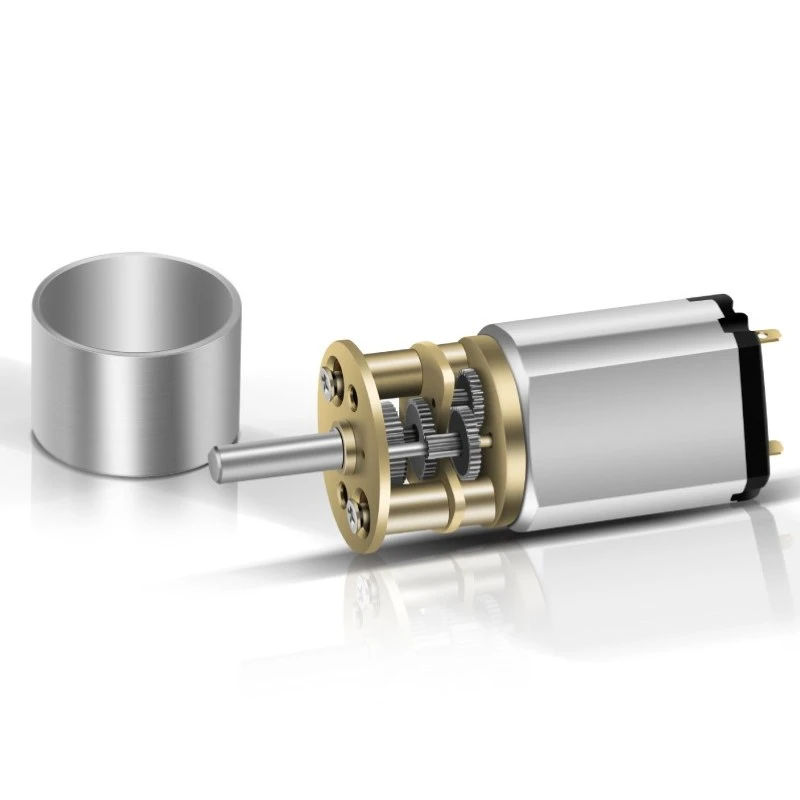
The Spur Gear Motor combines a DC motor with a multi-stage spur gearbox to provide a mature, efficient, and cost-effective drive solution for compact transmission mechanisms. Its simple gear structure supports flexible ratio, shaft, and mounting customization, making it suitable for smart home devices, commercial equipment, automotive actuators, smart landscaping systems, and industrial automation. It is a practical choice for projects that need a balance of output speed, torque, reliability, manufacturability, and cost.
The GM12 Series is a compact 12 mm-class DC spur gear motor platform developed for miniature mechanisms that require efficient speed reduction, controlled output, and cost-effective integration in limited space.
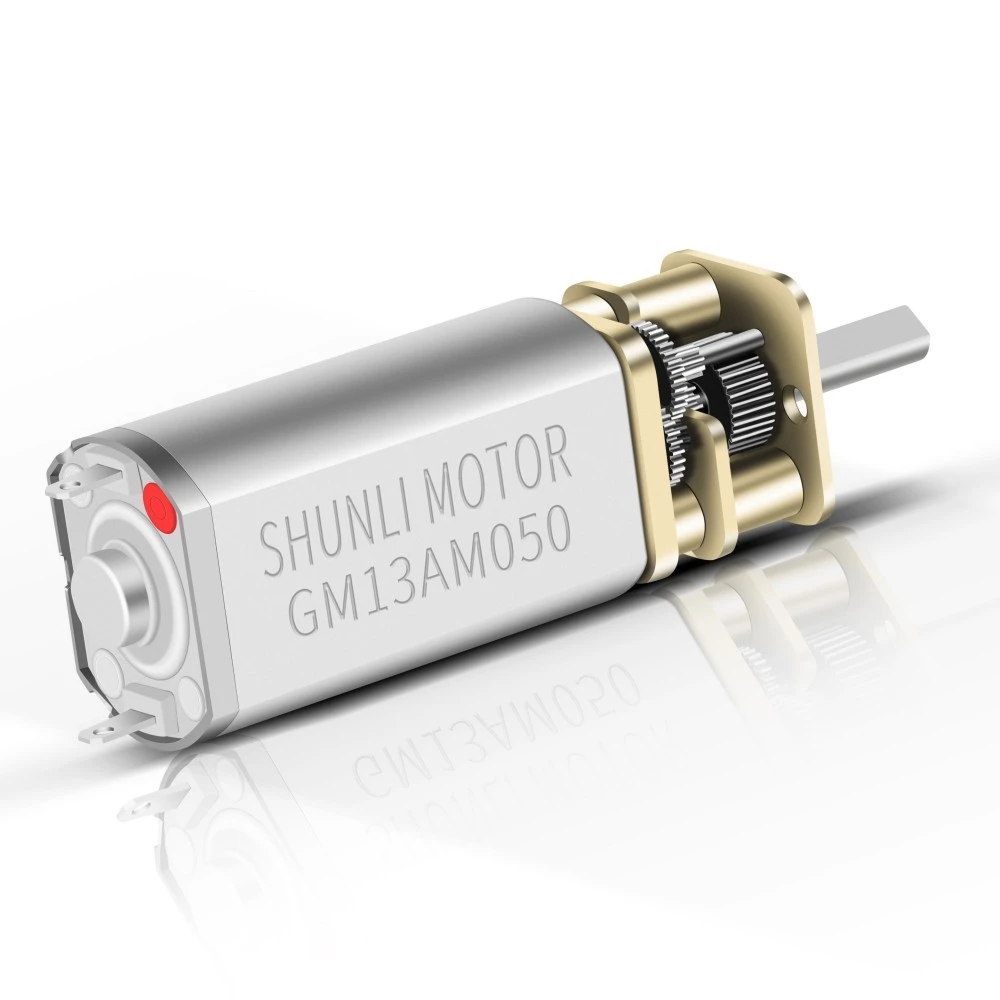
The GM13AM Series is a compact 13 mm-class DC spur gear motor designed for miniature mechanisms that require efficient speed reduction, stable low-speed output, and cost-effective transmission in a limited installation space.
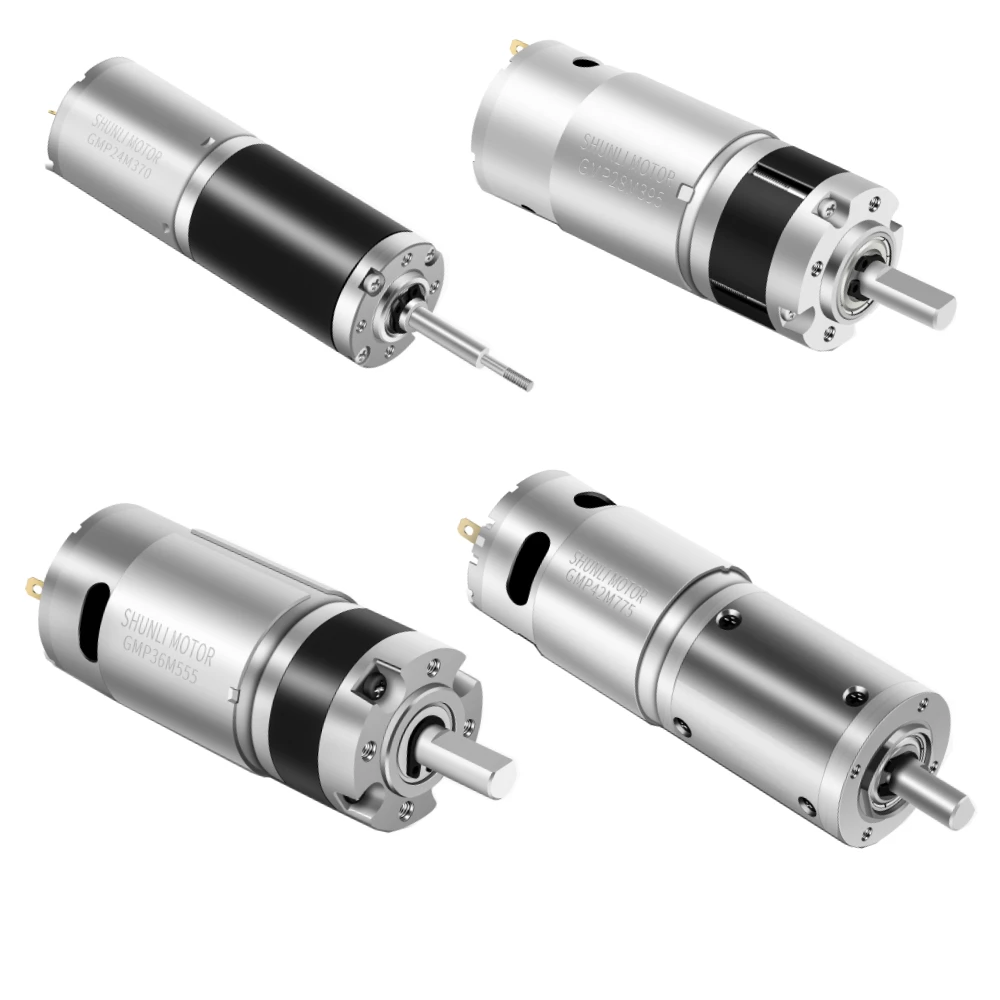
The Planetary Gear Motor uses a compact coaxial planetary gearbox to deliver higher torque density and stable transmission within limited installation space. Multiple planet gears share the load, making the structure suitable for applications that require compact size, reliable load handling, and frequent start-stop or reversing motion. It is widely used in robotics, medical equipment, industrial automation, automotive actuators, precision mechanisms, and other compact motion systems. Final selection should consider output speed, continuous and peak torque, duty cycle, backlash, current, and installation requirements.
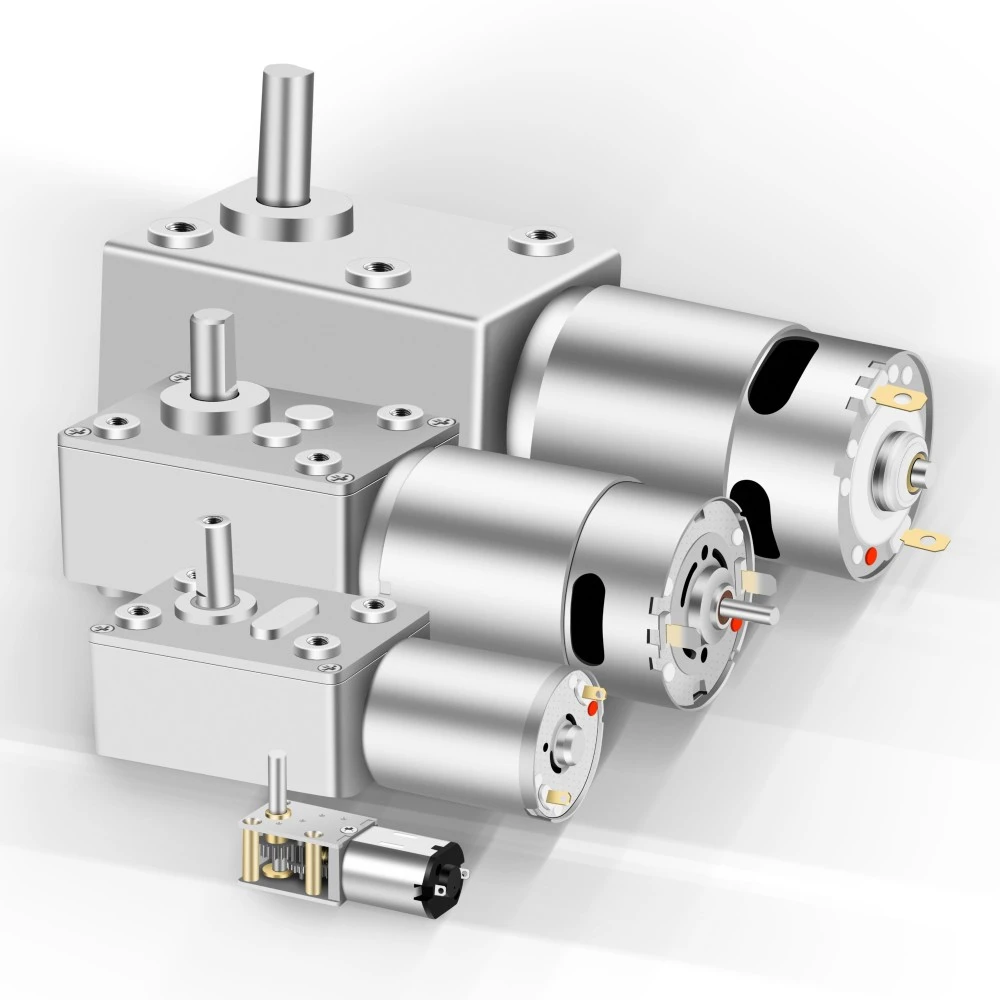
The DC Worm Gear Motor combines a DC motor with a worm gearbox to provide right-angle transmission, high reduction ratios, low-speed output, and strong load-driving capability in a compact structure. Its 90° output arrangement is well suited to valves, lifting and adjustment mechanisms, doors and windows, vending equipment, and other actuators where space layout or load-holding performance is important. Depending on the gear geometry and operating conditions, some worm gear designs may provide holding or self-locking characteristics, which should be verified for the actual application.
The GM16 Series is a compact 16 mm-class DC spur gear motor platform designed for miniature transmission systems that require efficient speed reduction, controlled low-speed output, cost-effective construction, and repeatable mass production.
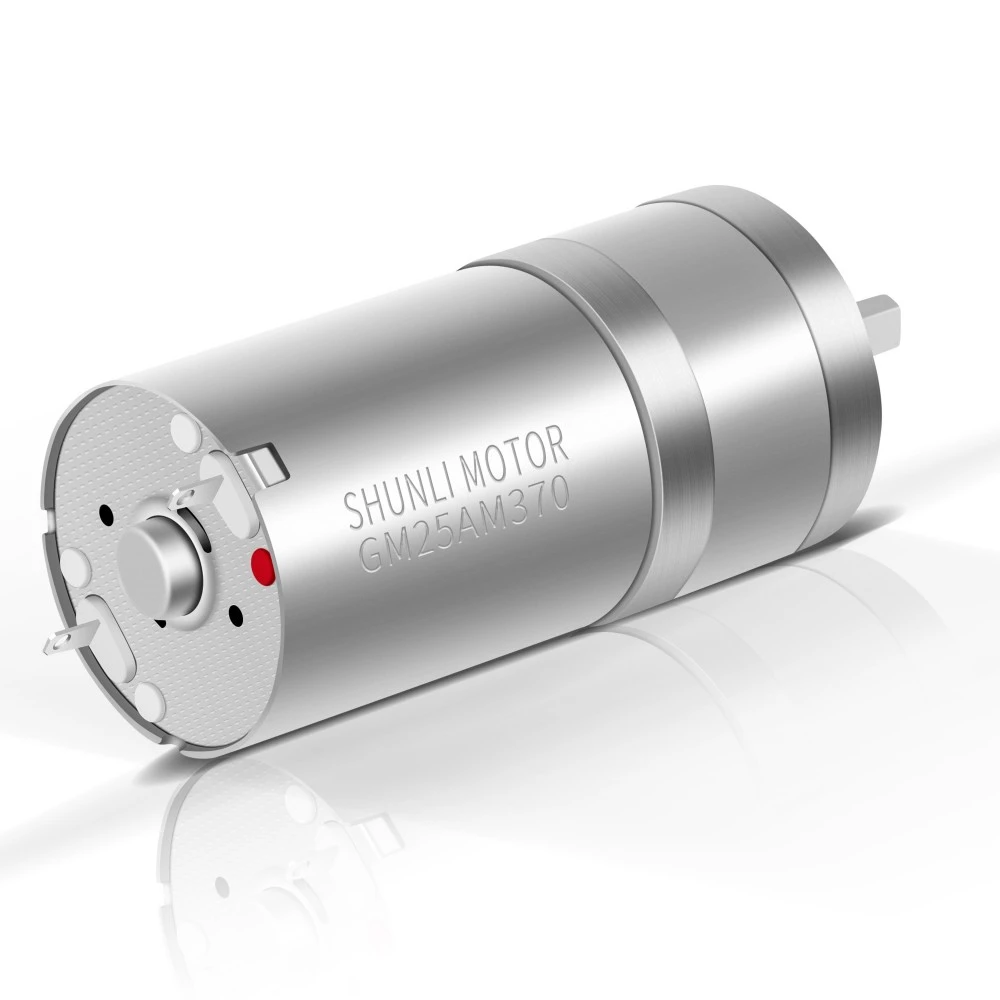
The GM25AM310/370 is a 25 mm-class DC spur gear motor platform combining a compact multi-stage gearbox with PMDC 310 or 370 motors. The supplied technical data covers gearbox options from 3 to 8 stages, multiple reduction ratios, and two reference gearmotor configurations: GM25AM310-217K at 3 VDC and GM25AM370-99K at 12 VDC.
The GM24 Series is a compact 24 mm-class DC spur gear motor platform developed for small transmission mechanisms that require efficient speed reduction, stable output, and cost-effective mass production.
Navigation
Navigation
Product Categories
Product Categories
Contact Us
Get in Touch
Get in Touch
Request a Quote


 Youtube
 Tiktok
 Linkedin
 Instagram
 Facebook
 WhatsApp
 WeChat